

Holistic Coordination: Aligning All Parts of Your Financial Life
High earners and business owners often experience financial complexity not because any single piece is difficult—but because the pieces aren’t coordinated. Holistic management ensures that investments, taxes, workplace benefits, business equity, insurance, and estate planning work together rather than against each other.
Why coordination matters
For affluent families, tax inefficiencies alone can erode 1–2% of annual returns [1], according to Morningstar and academic studies on investor behavior. Coordinated planning also reduces risk: research from Cerulli shows that households with integrated financial planning are 32% more likely [2] to meet long-term goals.
What holistic coordination looks like
We serve as your financial quarterback—tracking deadlines, synchronizing with your CPA and attorney, and making sure each decision supports the bigger picture. This includes entity selection, compensation structure, benefit elections, debt planning, and wealth-transfer goals.
Tax Buckets

Taxes Matter
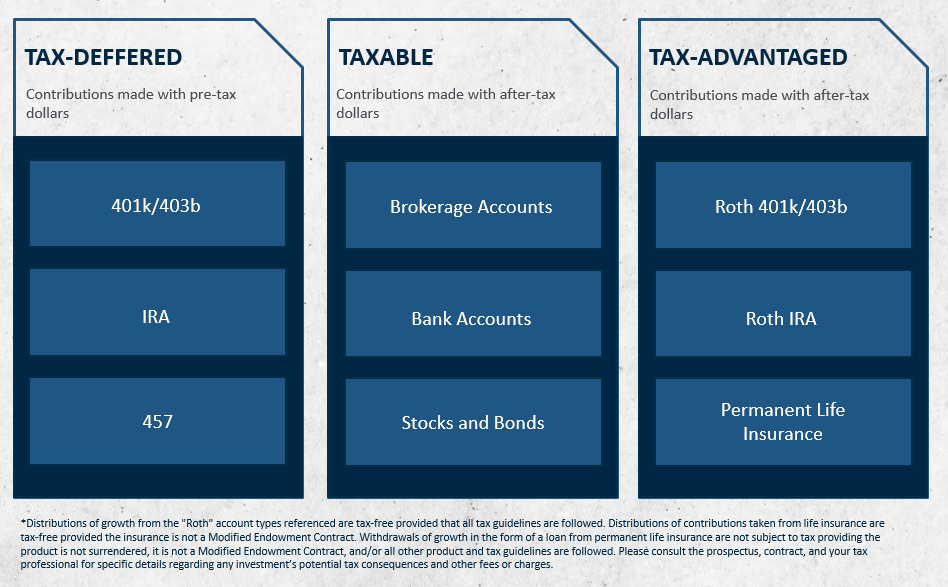
Tax Structure Matters

Example
When reviewing a medical group’s new buy-in structure, we coordinated between the client’s CPA, the plan documents, and her long-term retirement plan. By aligning contributions, loan structure, and deferral strategies, we reduced her projected tax bill by several thousand dollars annually—without changing her total savings rate.
[1] Morningstar, “Mind the Gap 2023.”
Demonstrates that poor tax management and investor behavior create 1–2 percentage points of annual drag in real-world portfolios.
[2] Cerulli Associates, “U.S. High-Net-Worth and Ultra-High-Net-Worth Markets 2022.”
Reports that HNW families with integrated planning have significantly higher goal completion and “plan adherence” metrics—32% higher than non-coordinated households.
Disclosure: This article does not constitute professional advice. Information is accurate at the time of writing but may be subject to change.
Content is intended for informational purposes only and should not be considered as financial advice. Please consult with a professional financial advisor and perform your own analysis before making any decisions. It is very important to do your own analysis before making any investment based on your own personal circumstances.
Advisory services are offered through 25 Financial, a Securities and Exchange Commission Registered Investment Advisor.
25 Financial Advisors are not tax professionals. You should consult with your tax professional before taking actions which affect your tax situation.


