

Alternatives Access: Institutional-Grade Opportunities With Discipline
Alternative investments—private equity, private credit, real estate, and other non-public strategies—can improve diversification and return potential when used thoughtfully. They can also introduce complexity, fees, and liquidity constraints. Our role is to help clients access quality opportunities while applying consistent due diligence and risk controls.
Why alternatives matter
Over the last two decades, private equity generated approximately 300–500 basis points of annual outperformance [1] over public markets according to major index providers. Private credit has delivered higher yields and lower volatility [2] than high-yield bonds across multiple cycles. But dispersion between top- and bottom-quartile managers is wide—meaning access and screening matter.
Our approach
We evaluate sponsors, track records, fee structures, stress-test assumptions, and liquidity terms. We favor institutional-grade managers and co-investments where incentives are clearly aligned. Alternatives fit only when they improve the overall portfolio—not when they simply sound attractive.
Why alternatives matter
Over the last two decades, private equity generated approximately 300–500 basis points of annual outperformance [1] over public markets according to major index providers. Private credit has delivered higher yields and lower volatility [2] than high-yield bonds across multiple cycles. But dispersion between top- and bottom-quartile managers is wide—meaning access and screening matter.
Oil and Natural Gas Investments
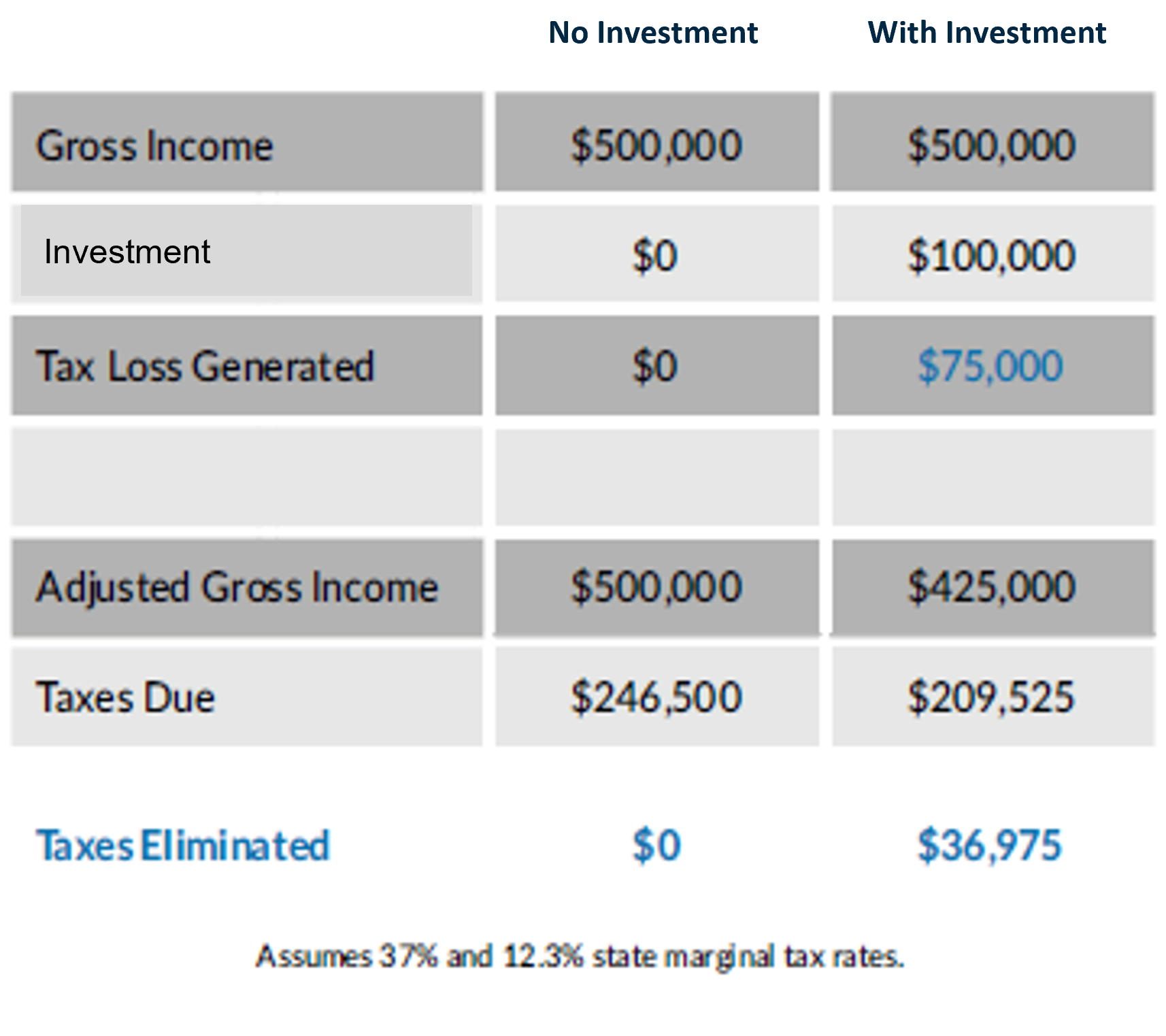
Oil and gas investments can offer unique tax mitigation.
Deductions come from Intangible Drilling Costs’ under IRC Section 263(c).
Taxes eliminated may decrease marginal tax bracket and taxes saved can be reinvested to increase growth.
Example
A family approaching retirement wanted income but was wary of interest-rate volatility. After reviewing their liquidity budget and tax profile, we allocated a portion of their portfolio to a real estate fund with quarterly distributions. The allocation increased projected portfolio income without compromising risk parameters.
[1] Burgiss, “Private Capital Performance: Latest Update.”
Burgiss data consistently shows private equity outperforming public equities by 300–500 basis points annually over rolling 10–20 year horizons.
Cambridge Associates Private Equity Index (multiple annual updates).
Confirms long-term private equity returns exceeding public markets by a similar margin.
[2] Cliffwater Direct Lending Index (CDLI).
Demonstrates lower volatility and higher yields for private/direct lending compared to high-yield bonds over multi-cycle periods.
BlackRock, “Private Credit: An Expanding Opportunity Set” (2023).
Shows private credit producing higher income with comparable or lower volatility than public credit strategies.
Disclosure: This article does not constitute professional advice. Information is accurate at the time of writing but may be subject to change.
Content is intended for informational purposes only and should not be considered as financial advice. Please consult with a professional financial advisor and perform your own analysis before making any decisions. It is very important to do your own analysis before making any investment based on your own personal circumstances.
Advisory services are offered through 25 Financial, a Securities and Exchange Commission Registered Investment Advisor.
25 Financial Advisors are not tax professionals. You should consult with your tax professional before taking actions which affect your tax situation.